In 1204, God killed himself. And his blood poisoned the earth.
Six hundred and sixty-six years later, people still live among his remains. Cities trade in red water, churches argue over the future of the dead Creator, anatomists dissect impossible flesh, and small warbands leave the walls in search of knowledge, supplies and pure divine blood. This is not a story about the end of the world. The world has already ended—and humanity learned to live after it.
In 1204, God died
In 1204, the heavens opened across the entire world.
People divided by seas, languages and faith witnessed the same event. Yet none described what they saw in the same way. A European monk wrote of Christ. A Muslim chronicler wrote of unbearable light. A Chinese historian saw an enormous being that covered the sky. In other records, God had no face, no human form and no comprehensible size.
Every account contradicts the others in all but one detail:
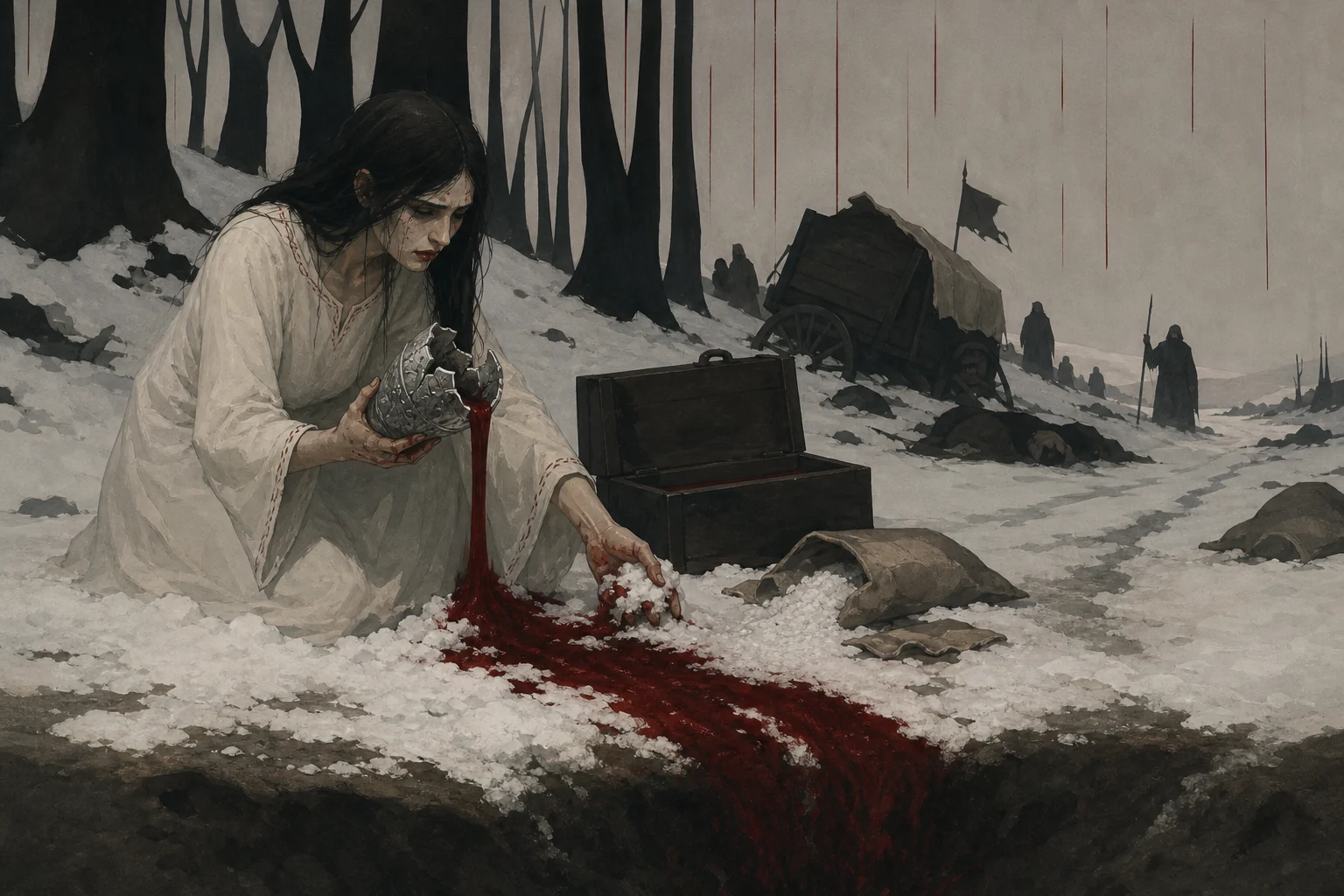
He drove both hands into his own chest and tore it open.
Then the blood began to fall.
Humans did not kill God. He did not die in battle or fall to another’s weapon. Humanity watched the Creator take his own life. Nobody knows why. In more than six centuries, no church, school of philosophy or scientific academy has produced an answer that can be proved.
Blood fell upon the earth together with pieces of the body. The impact of the remains split the ground, raised seas and erased entire regions. Coastlines changed, roads vanished and rivers found new courses. The world did not become smaller, but far less of it remained habitable and accessible to humanity.
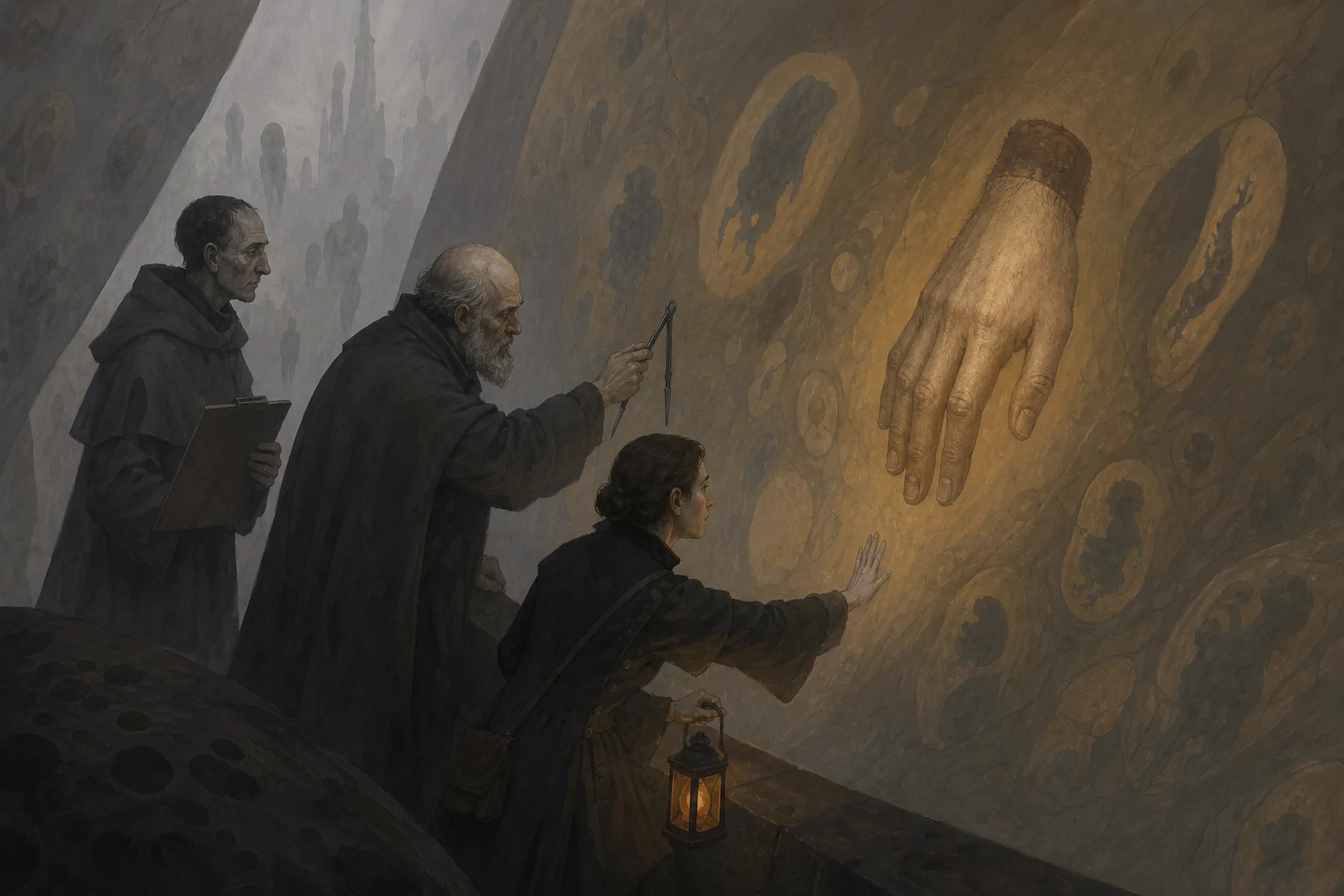
The largest remains became part of geography. Settlements are built beside divine bones, within them and on top of them. Yet the body of God cannot be assembled into any comprehensible anatomy. A recovered hand truly resembles a hand, but contains seven bones where there should be one. A recovered eye fits none of the proposed reconstructions of the head. Even dead, God remains beyond understanding.
The Great Plague — 1348
The first generations survived the Fall and began to rebuild. Then, in 1348, the body of God began to rot.
The Great Plague began. It killed roughly four fifths of the population and destroyed what humanity had managed to rebuild after the first catastrophe. Cities emptied, workshops and schools disappeared, trade routes broke apart, and much knowledge became rare once more.
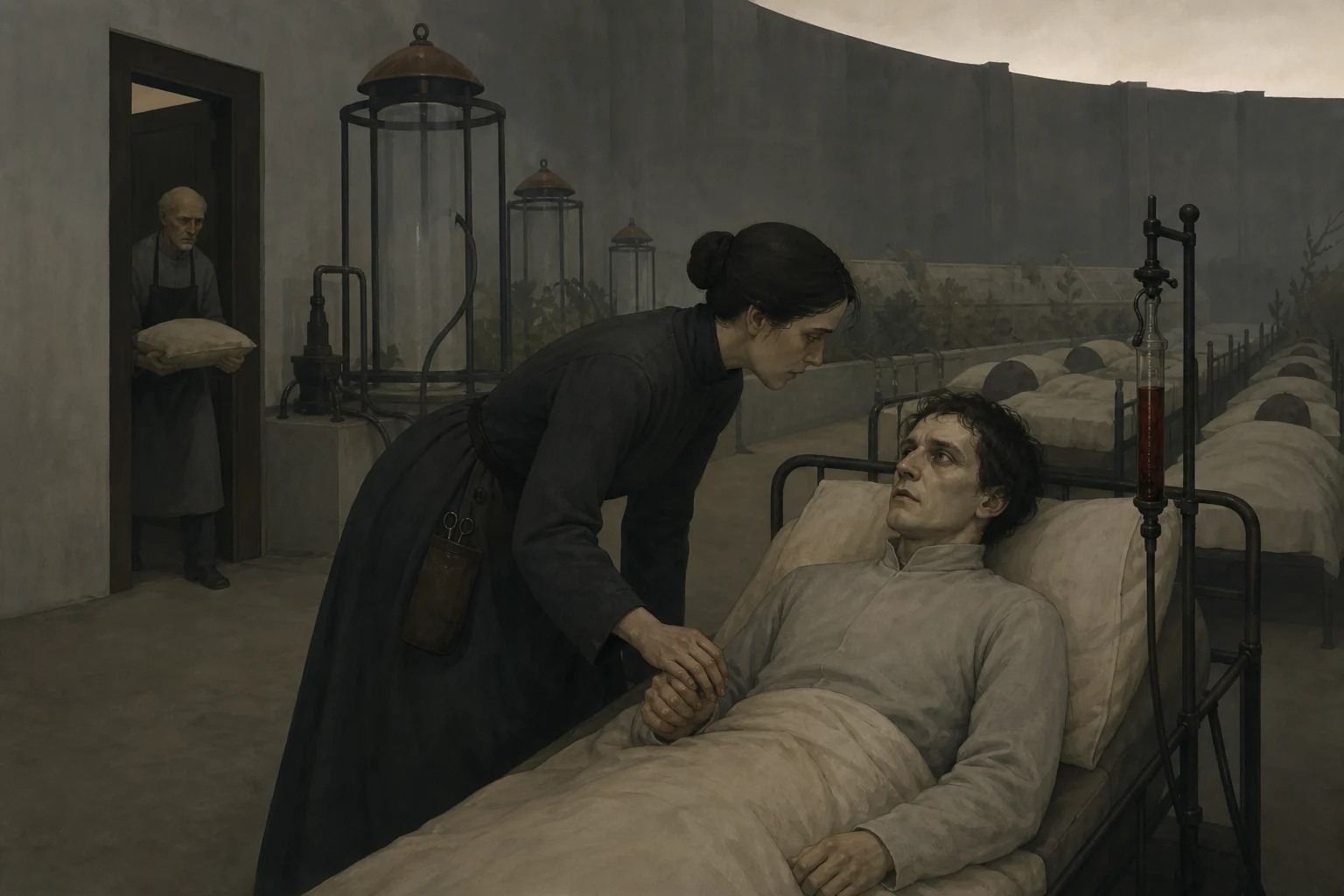
By 1870, most people possess a strong resistance to the Plague. Infection remains possible but is rare; a rumour of a new outbreak is still enough to close a city’s gates and condemn everyone left outside. Some lands have been safe for generations. Nobody enters others without a mask, a guide and the readiness not to return.
The blood’s effects are not limited to disease. Bearing a child has become harder, miscarriages are more common, and mutations ceased to be exceptional wonders long ago. In one city, an unusual appearance brings fear and exile. In another, the same traits appear in most inhabitants and are considered ordinary. The world is inhabited by humans, but the word “human” has become far broader than it once was.
The world in 1870
Exactly 666 years have passed since the death of God.
For some, the date promises an imminent resurrection. For others, it means the Last Judgement, a second sacrifice, the end of the old covenants, or a convenient lie told by the clergy. Pilgrims take to the roads, preachers gather crowds, and authorities prepare for unrest. Nobody knows whether the number holds any power, but belief in that power is already changing the world.
The old states are gone. Independent city-states, villages, trade alliances, monastic domains and territories ruled only on maps stand between ruined borders. Recently, the ruler of two major cities declared himself the First Emperor and promised to reunite the scattered lands. He offers some cities protection and trade; from others he demands taxes, recruits and soldiers. But the Empire is only one of countless events unfolding across the world, and the Emperor himself remains somewhere far away.
Technology developed unevenly. A single warband may carry a cuirass, a sword, a rifled gun and a field telegraph. Most lands live among the crafts and weapons of the eighteenth and nineteenth centuries; individual cities possess revolvers, machine guns, advanced chemistry, surgery and steam engines. Railways are rare, supply is unreliable, and there are no aircraft or armoured hordes. New weapons have not erased the old: a good suit of armour can still be more useful than a mechanism for which nobody knows how to make spare parts.
Even so, this is not an endless war of everyone against everyone. People grow bread, marry, bargain, celebrate, love, lie and make plans for the future. To a person living in 1870, the death of God is not a fresh apocalypse but an inheritance from their ancestors. Life continues not because of some grand purpose, but because it has value in itself.
The Blood of God
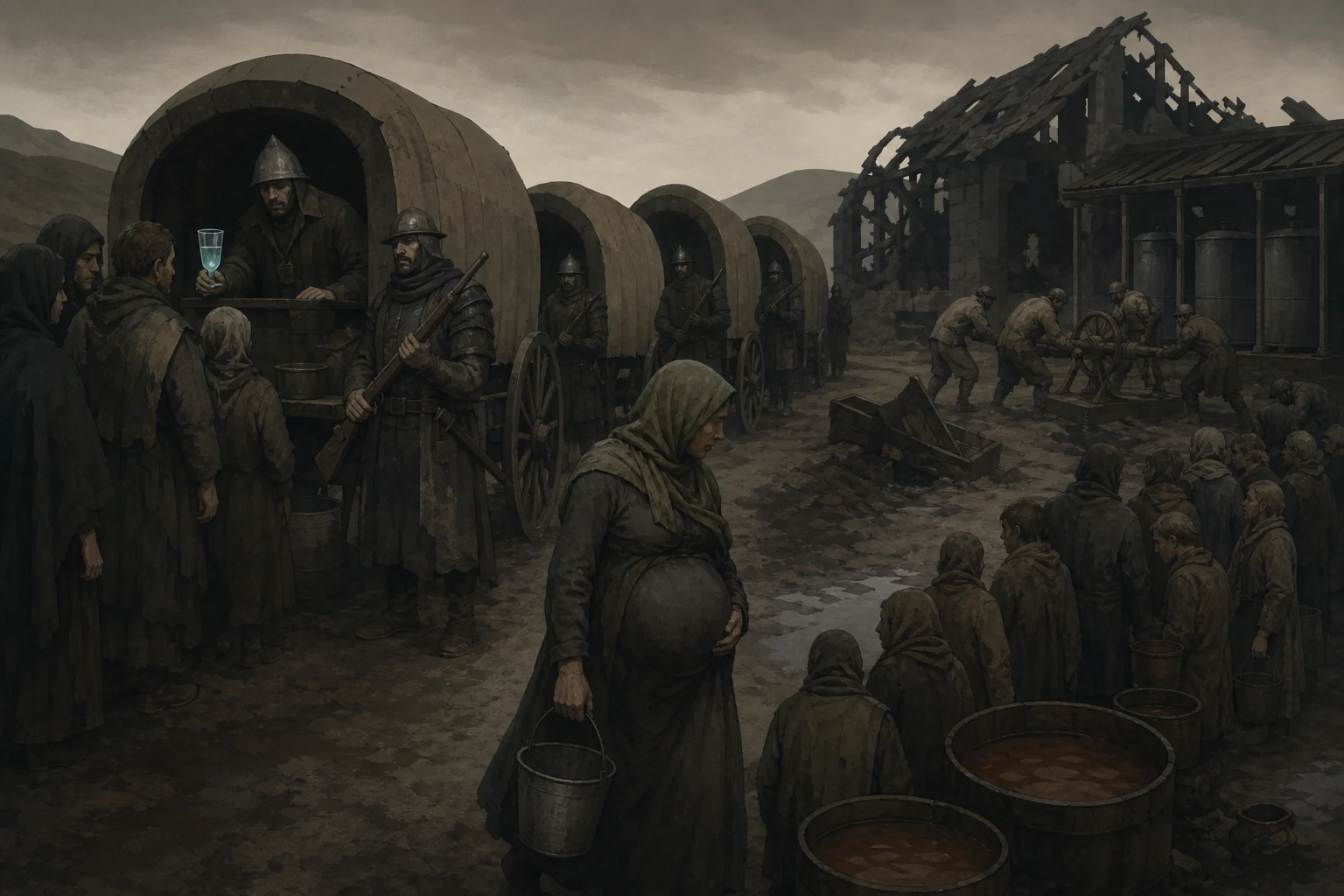
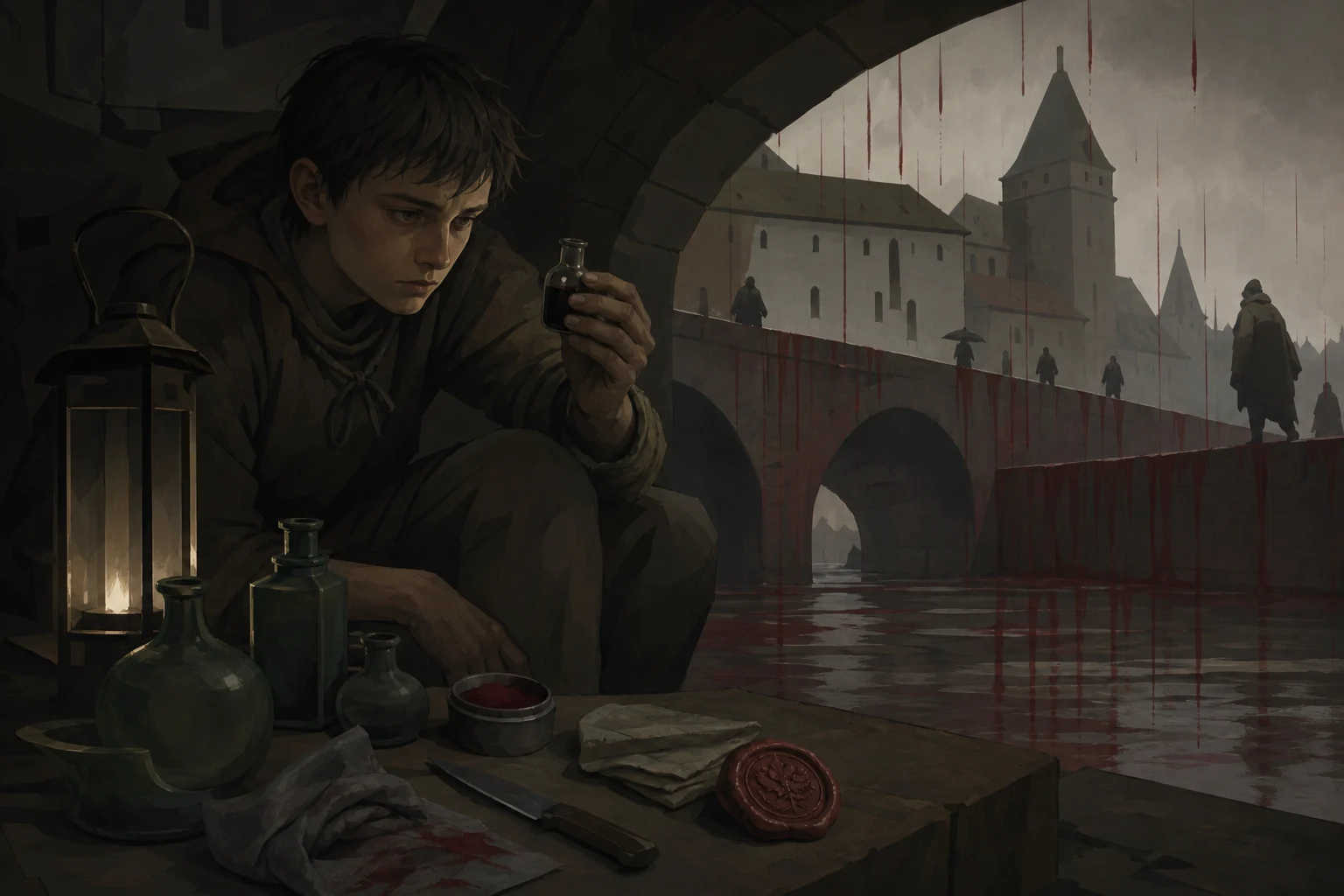
The blood entered the soil, plants, animals and the water cycle. No naturally occurring water remains entirely free of it. Rain can fall red, rivers carry a reddish tint, and well water tastes of iron. Clear water is produced through distillation, condensation and multi-stage filtration; for the poor, it remains a luxury.
But not all blood is the same.
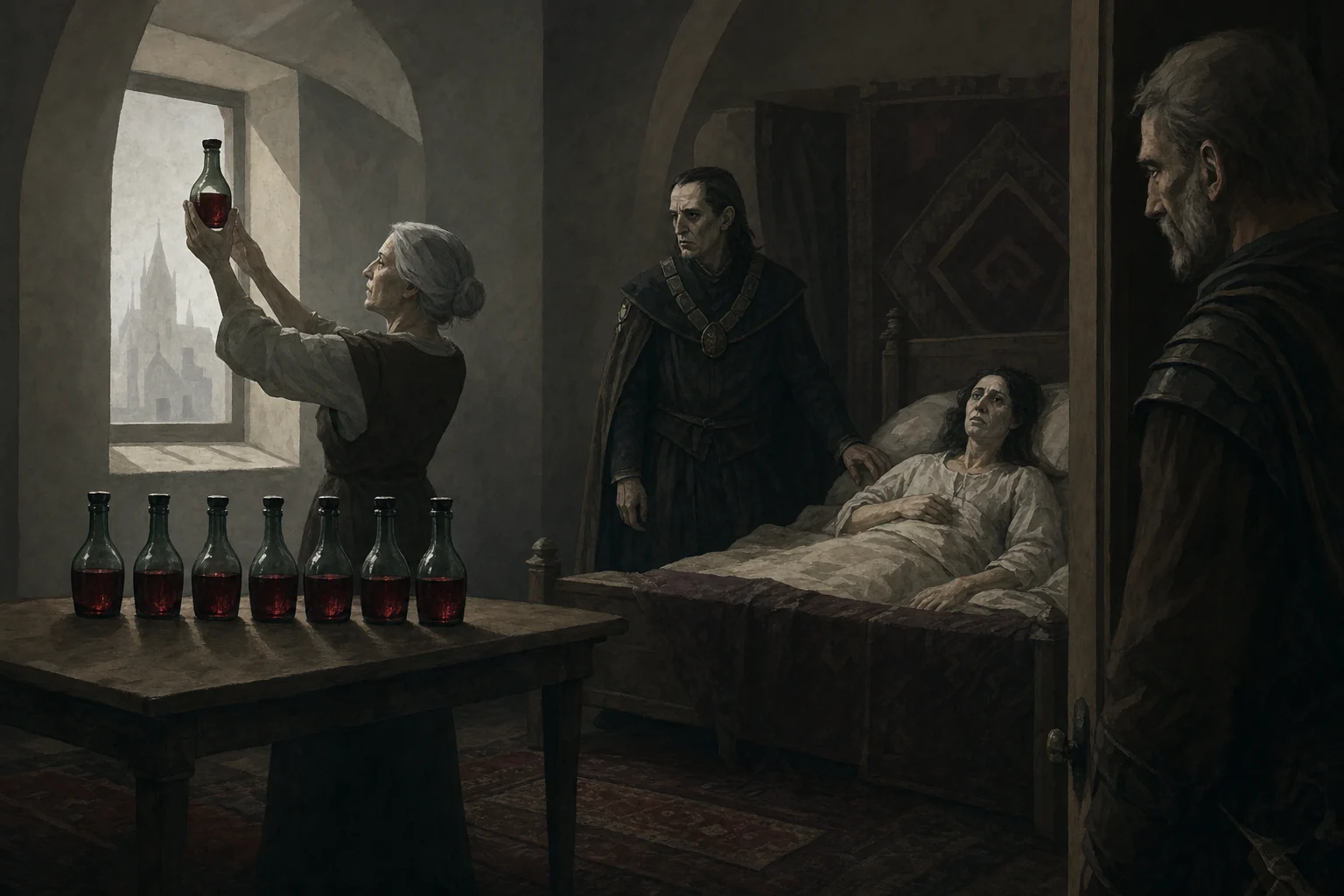
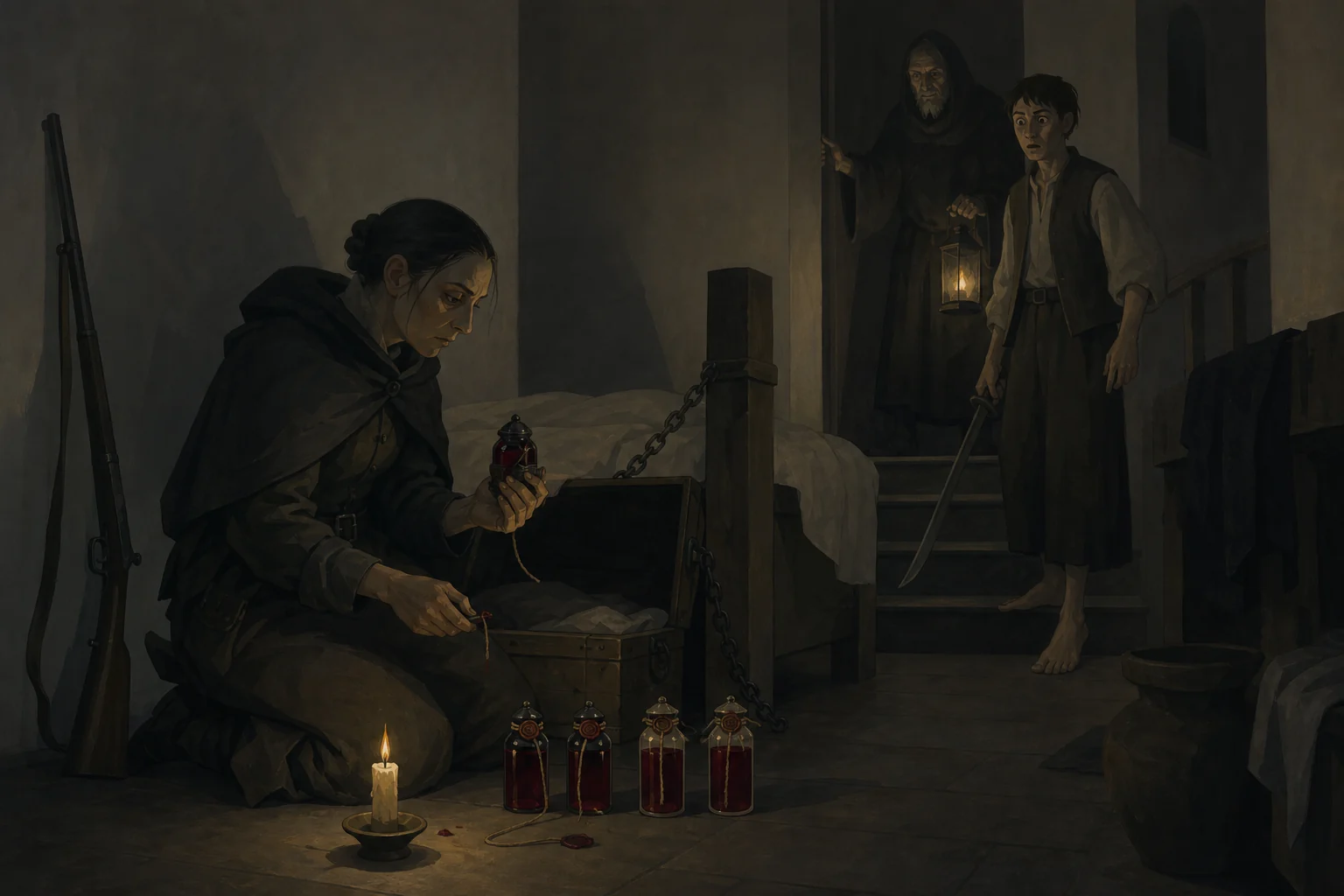
Absolutely pure blood preserved in sealed vessels or untouched remains can heal, sustain life and increase the chance of bearing a healthy child. It cannot be created anew, is almost never found, and is worth more than can be honestly measured in silver. Most people have never seen it and could not distinguish it from a dangerous counterfeit.
All other blood is unpredictable. It may help, do nothing, cause a change or kill. Rotten blood is especially dangerous. Every ampoule may therefore be a medicine, a fortune, a cause for war or a death sentence.
A sealed pre-reliquary was recently discovered in one of the great cities: a vault that may contain untouched remnants of the divine body. Nobody knows what lies inside. Some demand that the find be preserved forever. Others want to open it in the name of science. Still others believe the pre-reliquary must play a part in the future resurrection. While scholars, churches and rulers argue, rumours have already sent hundreds of people onto the roads.
Why small warbands fight
Great wars exist, but they happen somewhere beyond the horizon. This story is about those who pass between their lines.
Scouts, scientific expeditions, preachers, blood hunters, imperial envoys, looters and exiles leave the city walls. Some seek a route through altered land. Others escort a doctor, recover a stolen relic, gather food and water, study a newly discovered organ, or try to bring a missing person home.
An army needs too much food, transport and manpower. A small warband can pass where a great column would die of hunger, disease or ambush. That is why the most important tasks are often entrusted to a handful of fighters, each of whom knows why they left home.
Battle is not the purpose of every journey. Sometimes two warbands simply arrive at the same place at the same time—and discover that both cannot complete their task.
This is how the stories of Morsdei begin: not with great generals, but with a few living people at the edge of a red river. Each of them may return home, be changed, or remain among the bones of a world that outlived its own God.