The Last Order
In a world of rifles and factories, the Last Order still sends knights into battle with blades and hammers. This is a human army, but the bodies beneath its plate no longer fit ordinary human armour. For years, the brothers drink the dead God's blood, growing taller and more massive than the people beyond the Order's walls.
At first, isolation kept firearms out of their lives. When contact with the outside world returned, the absence of a technology became a deliberate refusal. The Order learned what gunpowder could do and rejected it: close combat, heavy armour and long years of personal training remained the foundations of its military.
Becoming a knight
The path begins with a young monk. A candidate trains, then faces trials of spirit and body; those who pass become a knight's apprentice. They begin receiving blood while still young, only after becoming apprentices. The blood is less pure at first, then increasingly pure as they mature and advance. Initiation changes not only a person's standing within the brotherhood, but their body itself.
The knights are not a collection of identical giants. Their enlarged bodies differ in proportion, and armour must be fitted to its particular wearer. Yet the Order follows a strict system: each battlefield role has its own pattern of armour. Brothers performing the same role wear roughly the same construction, even when its dimensions and fit differ.
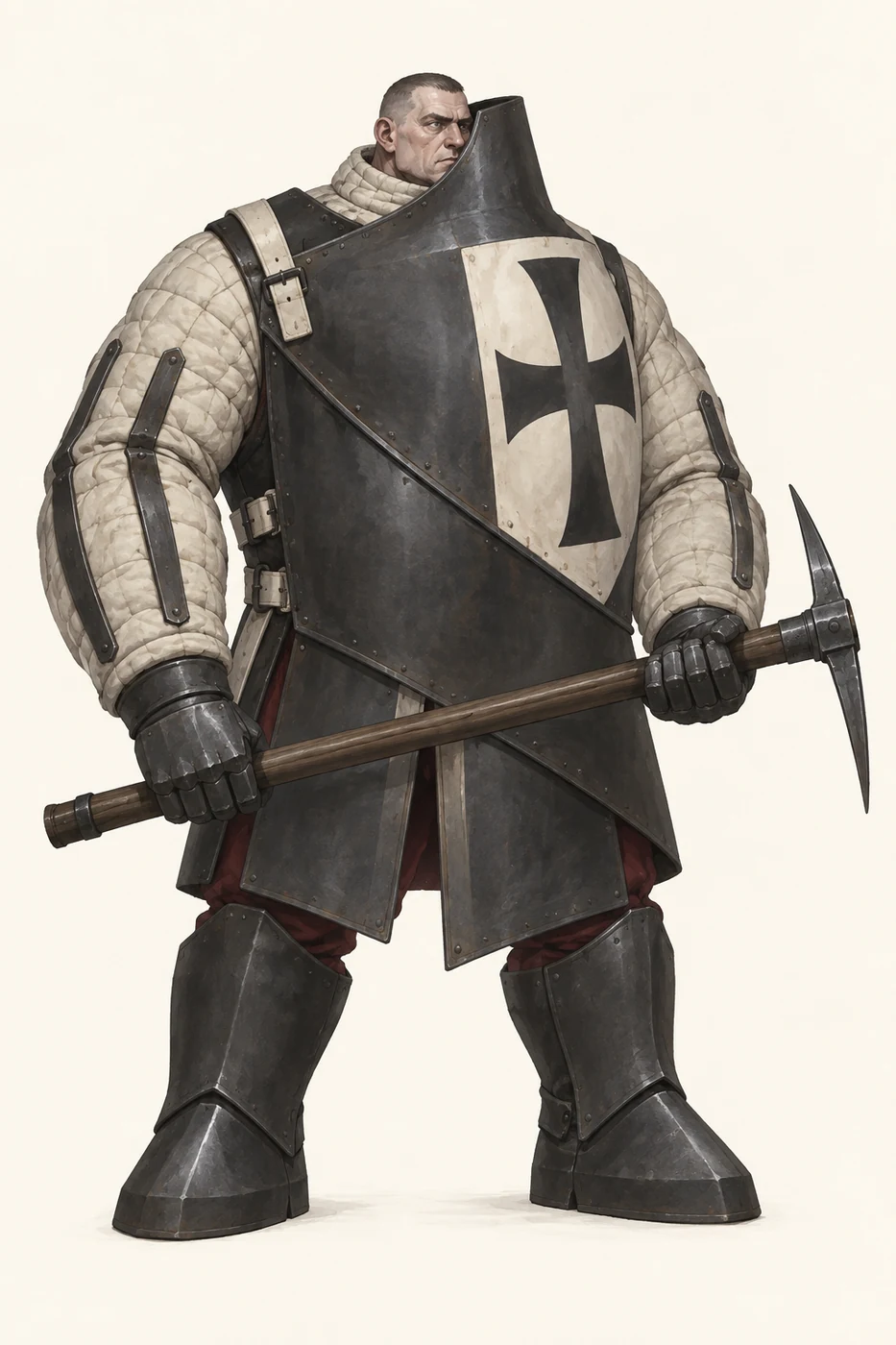
Brother-knight
The brother-knight forms the foundation of the warband. Here, an ordinary warrior is no novice: monastic training, trials and apprenticeship already lie behind him. His illustration makes the construction of the Order's armour particularly clear. A high collar and asymmetrical cuirass protect his altered torso, while broad quilted sleeves accommodate his massive arms.
Brothers in a warband
The Order's warbands follow an established organisation, not a commander's personal preferences. Seven roles show the tasks the brothers perform together. This is not a ready-made list of seven models, one of each type: exact numbers and mandatory composition are not specified here.
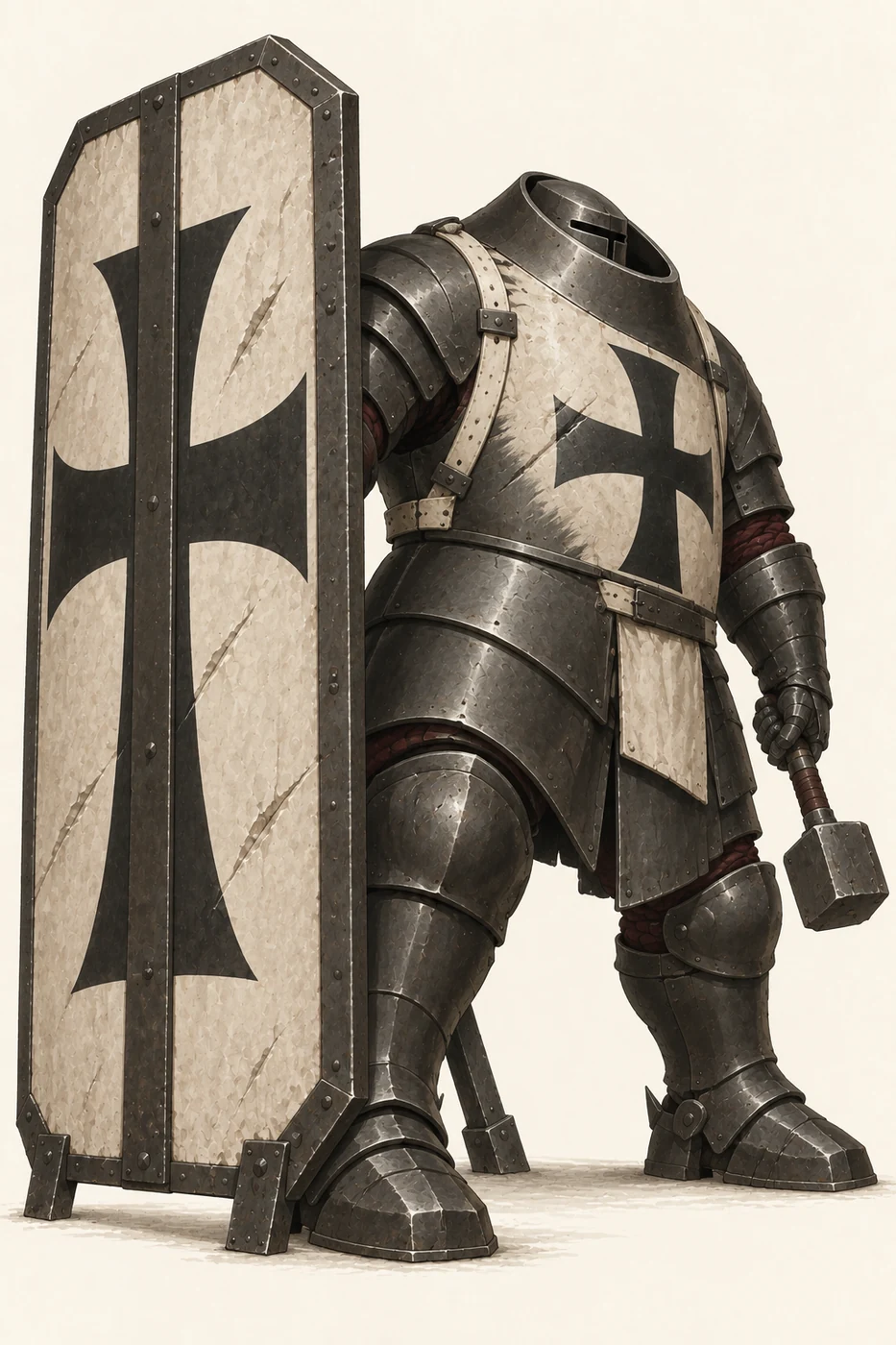
Knight-guardian
The tower shield makes the guardian's purpose immediately clear. He protects others and holds ground, facing the dangerous approach and helping his brothers close with the enemy. The vast shield, enclosed helmet and broad overlapping armour form a single imposing silhouette.
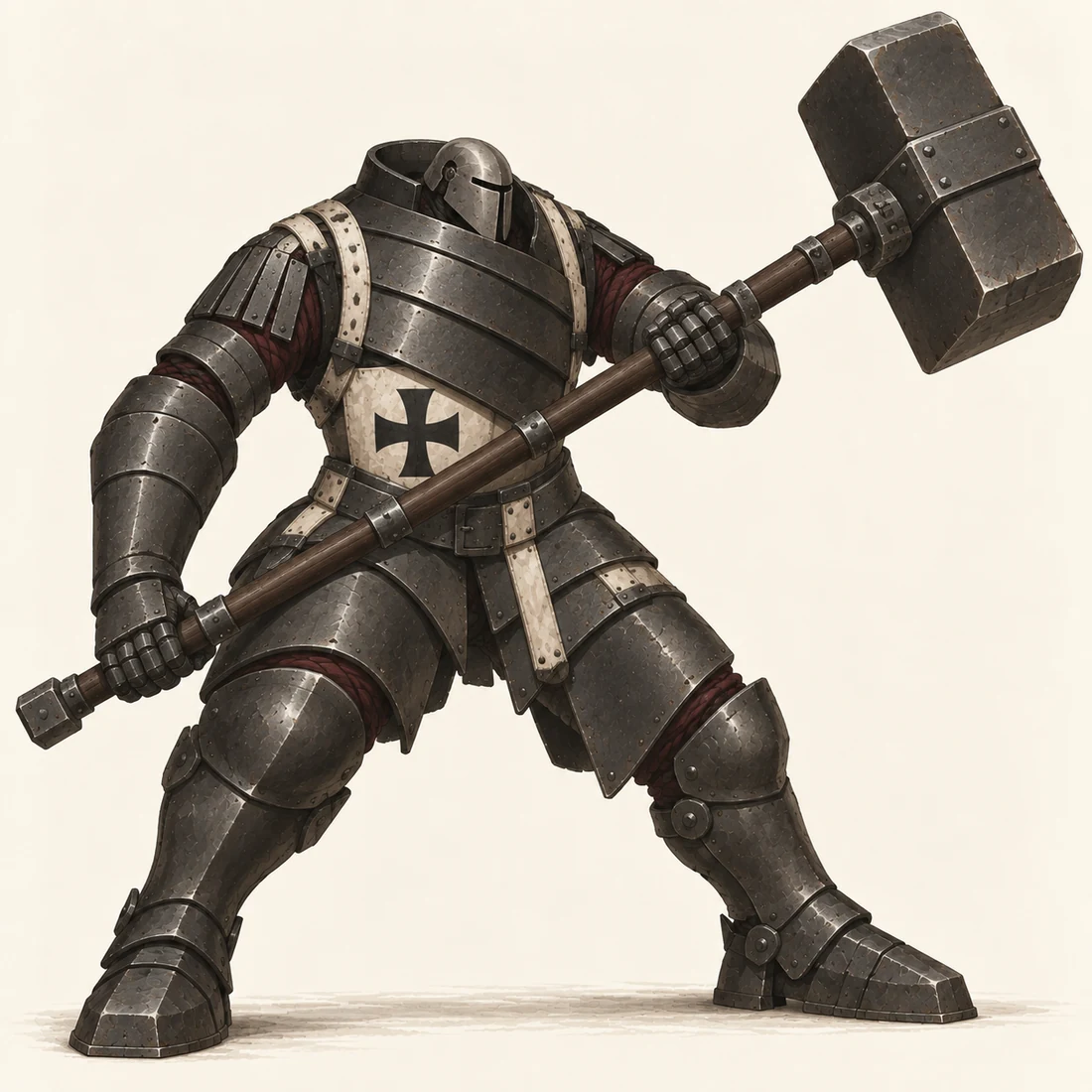
Brother-breacher
The breacher is made for heavy close combat and breaking through. Where the guardian blocks a blow, this brother delivers it. In his illustration, the enormous hammer and wide stance make his purpose unmistakable: confronting a tough opponent at close quarters.
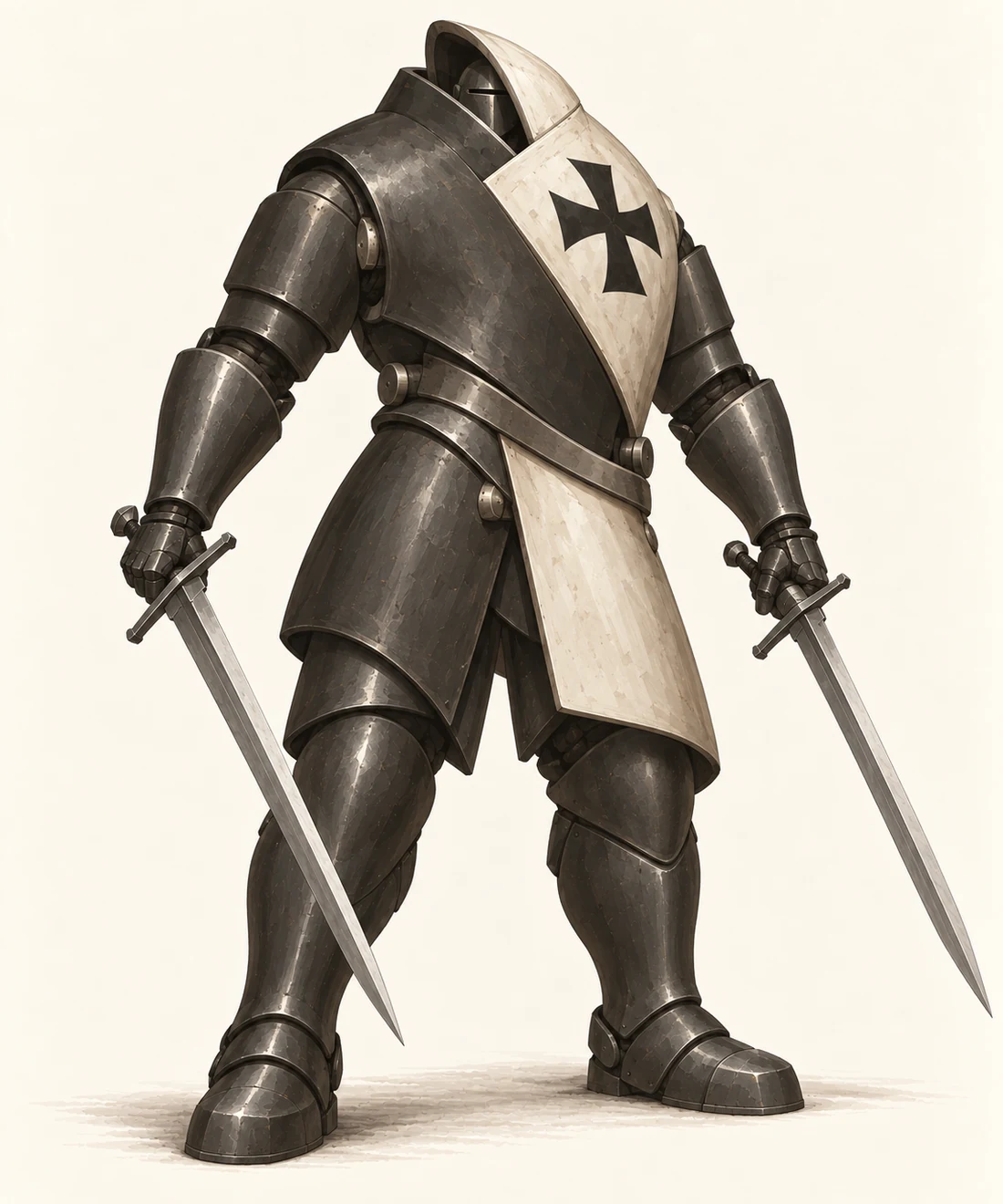
Blademaster
The blademaster embodies individual fighting skill. His appearance differs from the breacher's: an elongated, enclosed silhouette, asymmetrical neck protection and two blades in place of one enormous weapon. Distance, balance and finding a weakness in an opponent's guard matter as much as the strength of his altered body.
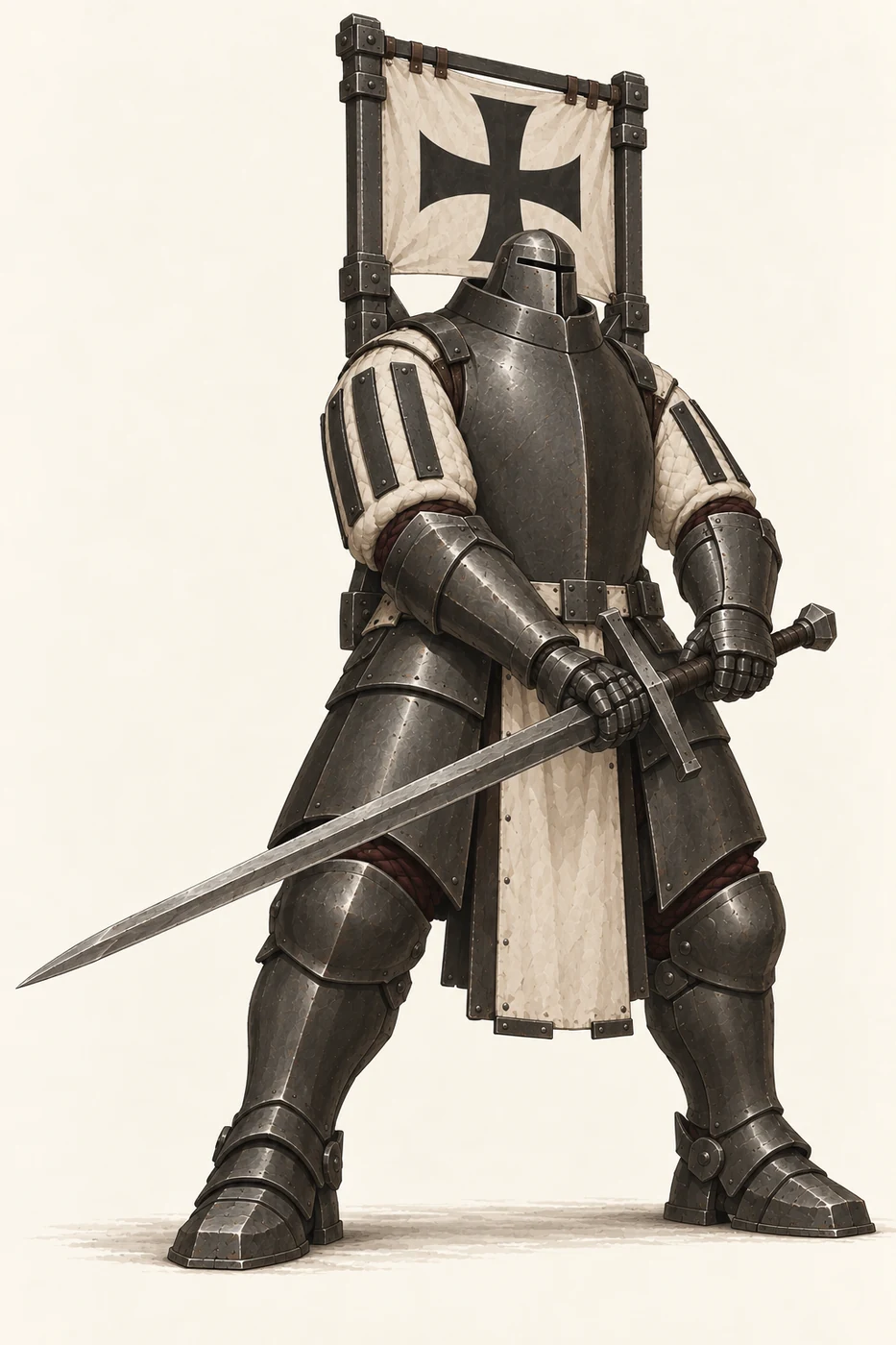
Knight-standard bearer
The standard bearer remains a fully fledged fighting knight. In the illustration, the banner is mounted behind his back and both hands hold a sword: his role is not simply to keep a pole clear of the fighting. Amid steel and quilted cloth, the banner gives the warband a shared, readily visible sign.
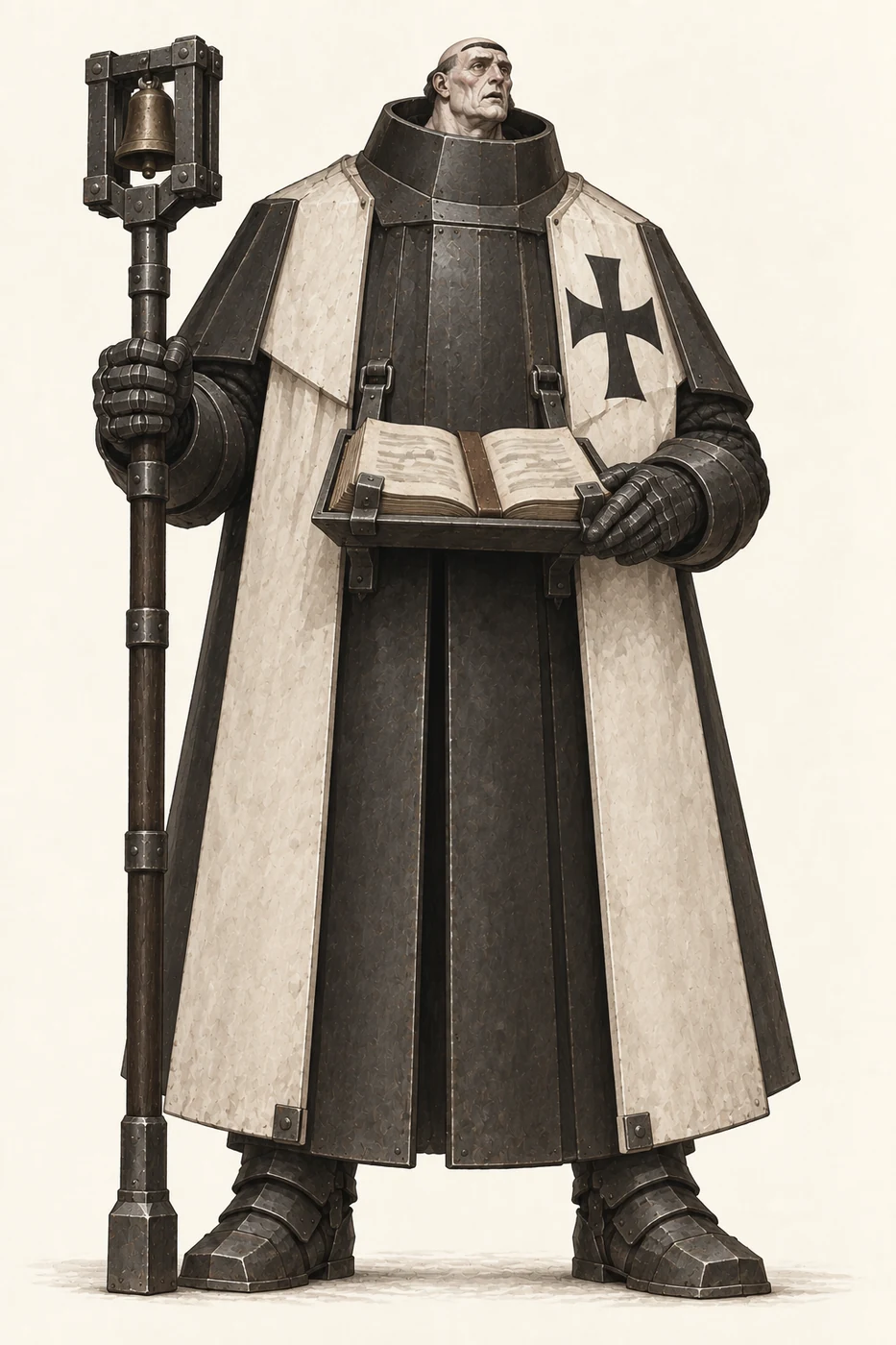
Chaplain
The chaplain is a fighting spiritual guide, concerned with the brothers' resolve and the Order's discipline. A book and a staff bearing a bell distinguish him, while the high collar and long armour panels keep him recognisably part of the faction. His spiritual office does not keep him out of battle.
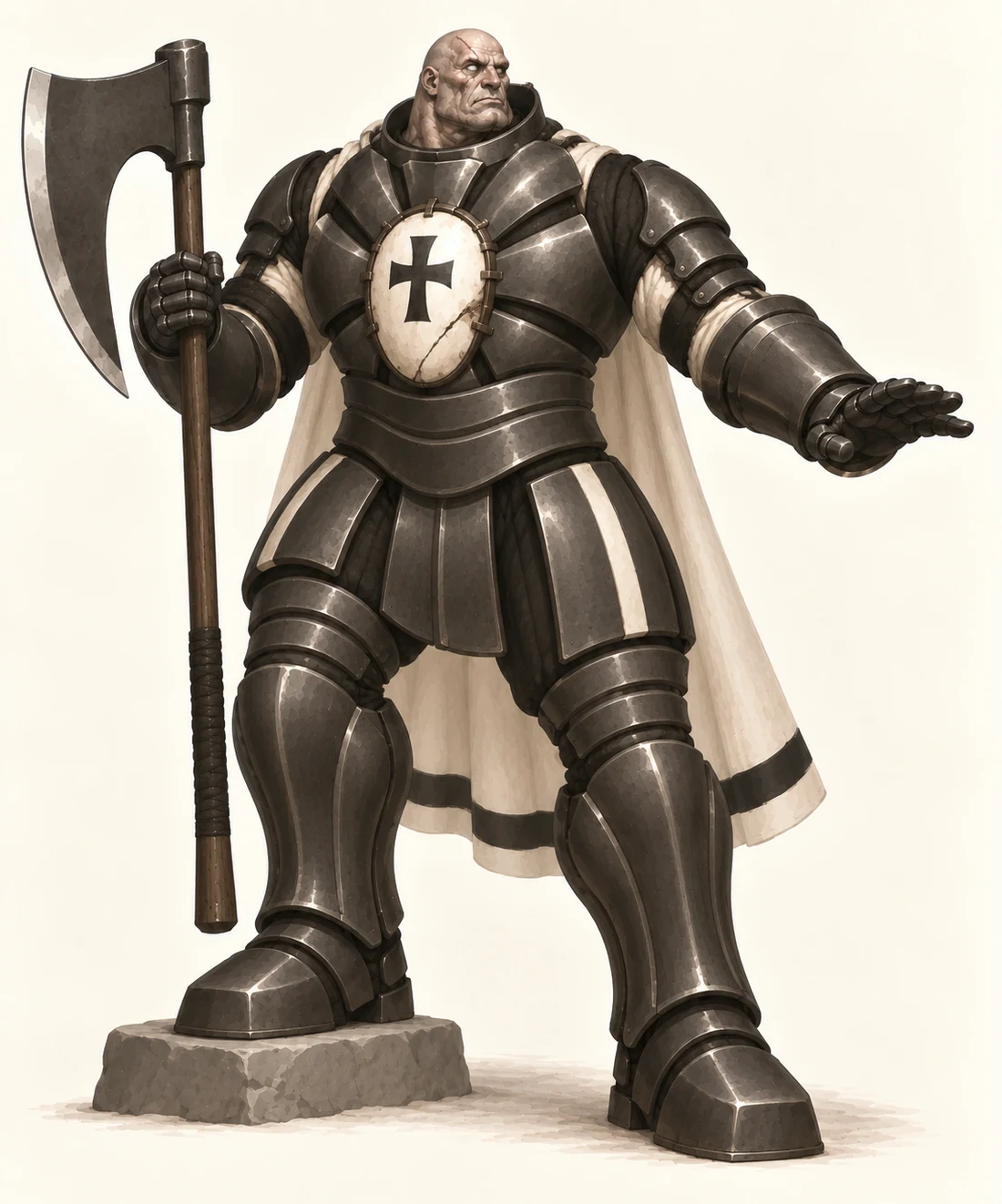
Commander
The commander leads a particular small warband, not the entire Order. He is an experienced knight entrusted with directing his brothers. A decorated cuirass, cloak and commanding gesture distinguish him; his heavy polearm is a reminder that he will lead from alongside them.
The Order on the tabletop
This is a highly elite close-combat army. Its defining features concern heavy equipment and the rejection of gunpowder, not invulnerability. The following faction-wide rules have been fixed for the seven types shown here:
- Heavy armour only
- Light and medium armour are forbidden.
- No gunpowder
- No gunpowder weapons may be used.
- Accustomed to the weight
- Fighters suffer no penalties for carrying heavy armour or heavy weapons. Injury and other independent effects still apply.
- A heavy weapon in each hand
- A fighter may carry two heavy weapons at once, one in each hand. This permission does not itself grant additional attacks.
- No Take Cover reaction
- Fighters cannot declare the defensive Take Cover reaction. They may still use cover and receive the usual terrain bonuses.
All seven types use 40 mm bases. The weapons depicted establish a fighter's appearance, not a mandatory loadout or numerical profile.
Game rulesThe Warband of Forgiveness
The first named warband of the Last Order is the Warband of Forgiveness. The name has been chosen; for now, who needs forgiveness remains an open question. We close with an image of the knights together: heavy shields, steel and pale cloth among ruined walls.
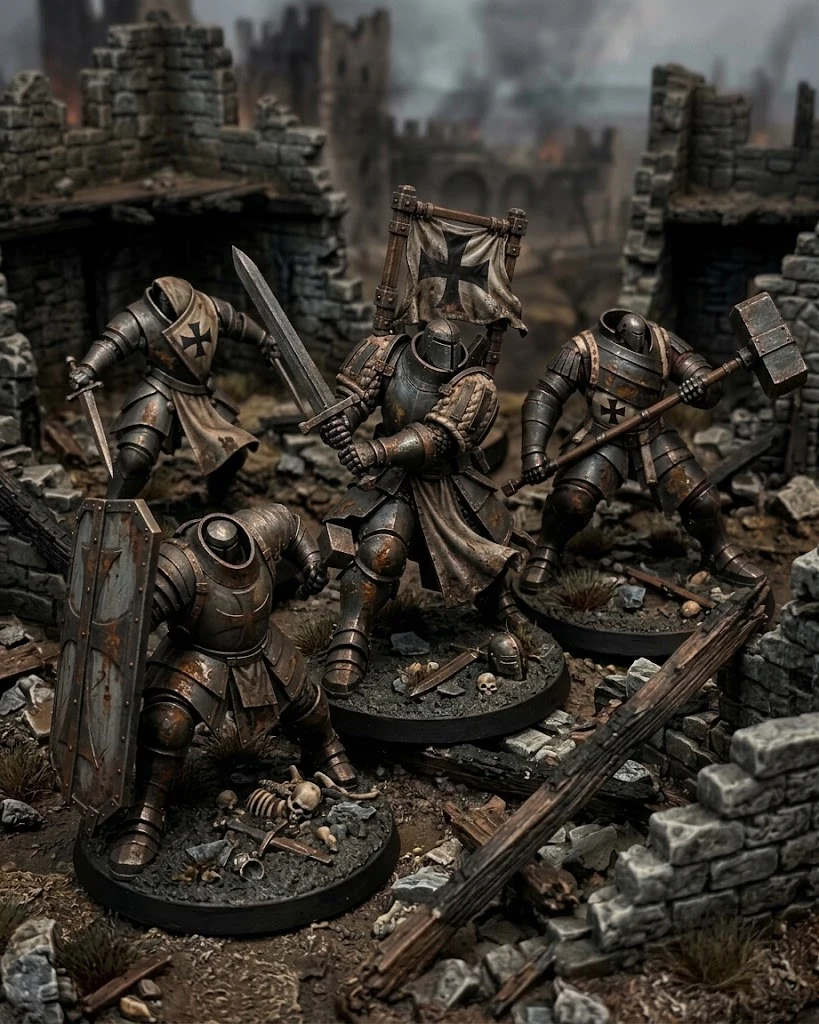
Images were supplied by the project's creator as visual references. The source records do not specify the artists or how the images were made.